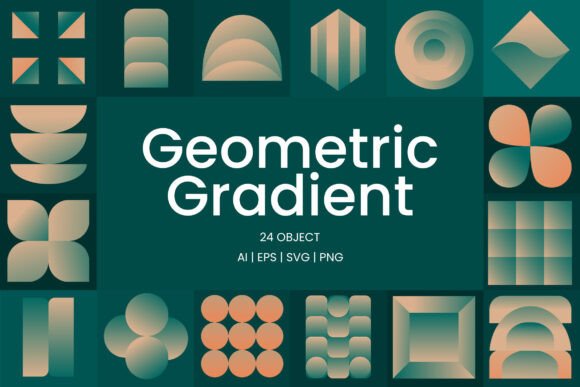
Geometric Gradient Shapes for Modern Design
In the crowded landscape of digital visuals, a single element can often determine whether a design feels dated or cutting-edge. Geometric gradient shapes have emerged as a powerful tool for designers seeking to inject energy and depth into their work without overwhelming the viewer. These are not merely flat icons or static blocks of color; they are dynamic forms that utilize smooth color transitions to create an illusion of movement and dimension. For anyone looking to elevate their visual communication, understanding how to leverage these assets is a crucial step toward creating professional-grade content.
This versatile collection offers 24 modern geometric shapes, each crafted with balanced gradients and clean lines. Whether you are working on a high-stakes corporate rebrand or a personal blog header, these elements provide a sleek, contemporary touch that resonates with current aesthetic trends. The ability to integrate high-resolution PNGs with transparent backgrounds alongside fully editable vector formats ensures that these tools adapt to your specific workflow, regardless of your technical expertise.
Understanding the Power of Gradient Geometry
At its core, Geometric Gradient Shapes represents a fusion of mathematical precision and artistic fluidity. Unlike solid colors, which can sometimes appear flat or one-dimensional on screen, gradients introduce light and shadow through color variation. When applied to geometric forms—such as circles, triangles, hexagons, and abstract polygons—the result is a visual texture that draws the eye and adds sophistication.
The versatility of this collection lies in its adaptability. The 24 included shapes cover a range of styles, from soft, pastel blends suitable for wellness brands to vibrant, high-contrast shifts ideal for tech startups. Because the designs prioritize clean geometry, they maintain structural integrity even when scaled up for large format printing or down for mobile app icons. This balance between form and function makes them a reliable foundation for abstract compositions, background patterns, and focal points in complex layouts.
Why Different Audiences Value These Assets
The appeal of geometric gradient shapes extends across a wide spectrum of users, each bringing unique priorities to the table. While the end product may look similar, the journey to get there varies significantly based on skill level and professional goals.
For Beginners and Hobbyists, the primary barrier to entry in design is often the fear of starting from scratch. Creating a perfect gradient or a mathematically precise polygon can be time-consuming and technically challenging. This collection removes that friction. By providing pre-made, high-quality assets, beginners can focus on composition and storytelling rather than getting bogged down in technical details. It serves as an educational tool, allowing new creators to see how professionals structure color palettes and shape interactions. A hobbyist designing a birthday invitation or a social media graphic can instantly achieve a polished look that would otherwise require hours of trial and error.
Freelancers and Small Business Owners operate under tight deadlines where speed directly impacts revenue. For these individuals, the "time-to-market" is critical. Having a library of ready-to-use shapes means they can deliver client projects faster without sacrificing quality. The inclusion of multiple file formats—AI, EPS, SVG, and PNG—ensures compatibility with various software suites, from Adobe Illustrator to web-based editors. A freelancer might use the vector files to customize a logo for a client, while a small business owner might drag and drop a PNG version onto a website banner using a simple CMS builder. The reliability of having high-resolution assets prevents pixelation issues, ensuring the final output always looks professional.
Marketing Professionals and Brand Managers care deeply about consistency and scalability. In branding, every visual element must align with the company's identity. Geometric gradient shapes offer a flexible canvas that can be adjusted to match specific brand colors. The editable vector nature of the AI and EPS files allows marketers to tweak the hue, saturation, and direction of the gradient to perfectly align with brand guidelines. This flexibility is essential for maintaining a cohesive visual language across posters, email headers, and social media campaigns. Instead of commissioning custom illustrations for every campaign, teams can repurpose these core shapes to maintain visual continuity while keeping content fresh.
Educators and Content Creators often need visuals that engage audiences quickly. In presentations, e-learning modules, or YouTube thumbnails, a strong visual hook is necessary to retain attention. Abstract geometric shapes can serve as effective dividers, bullet points, or background accents that make text more readable and slides less monotonous. An educator might use a soft gradient circle to highlight key concepts, while a video creator could use a sharp, angular shape to frame a title card. The ease of integration allows them to produce high-value content consistently without needing a dedicated design team.
Evaluating Quality and Flexibility
When deciding if Geometric Gradient Shapes fits your needs, consider the specific demands of your project. Quality is not just about resolution; it is about how well the asset integrates into your existing workflow. The transparent background feature is particularly valuable for layering. It allows you to place these shapes over photos, textures, or other graphics without awkward white boxes disrupting the flow. This capability is essential for creating depth in web design and poster art.
Flexibility is another key factor. The fact that the vector formats allow you to adjust colors, shapes, and scale without losing quality means these assets are future-proof. As design trends shift, you are not locked into a specific color palette. You can update the gradients to reflect seasonal changes or evolving brand strategies. This long-term usefulness provides excellent value, reducing the need to purchase new assets frequently.
Speed and reliability also play a role. In a fast-paced digital environment, having a toolkit that works immediately is a significant advantage. The variety of file formats ensures that whether you are working in a professional desktop application or a lightweight online editor, you will find a compatible version. This reduces technical headaches and keeps the creative process flowing smoothly.
Practical Applications Across Industries
The utility of these shapes transcends industry boundaries. In web design, they can break up large blocks of text, guide user attention to call-to-action buttons, or create immersive hero sections. For social media, they add a layer of polish to Instagram stories, LinkedIn banners, and Pinterest pins, helping posts stand out in a saturated feed. In print media, such as brochures and posters, the high-resolution nature of the files ensures crisp edges and vibrant colors that translate beautifully to physical paper.
Even within abstract art and creative portfolios, these shapes serve as building blocks for larger compositions. Artists can combine multiple shapes to create complex patterns or use them as focal points to anchor a piece. The modern aesthetic appeals to a broad audience, making it suitable for everything from fashion labels to tech conferences.
Ultimately, the decision to use Geometric Gradient Shapes comes down to your desire for efficiency, quality, and visual impact. Whether you are a novice looking to learn the ropes or a seasoned pro aiming to streamline your production, these assets offer a practical solution to common design challenges. By providing a balance of creativity and structure, they empower users to craft striking visual layouts and stylish patterns in just a few clicks, turning good ideas into exceptional realities.