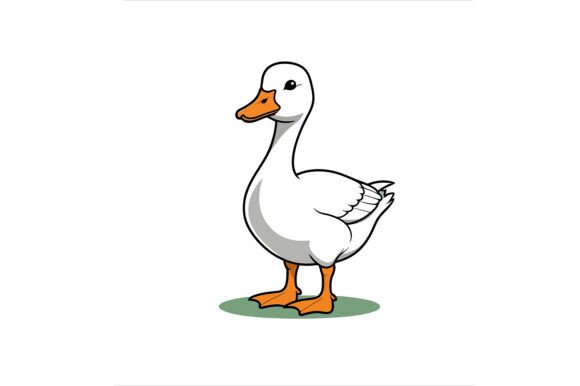
Cute White Duck Standing: A Practical Guide to Vector Illustrations for Design
In the landscape of digital design, selecting the right visual asset is often a balance between aesthetic appeal and technical utility. The Cute White Duck Standing illustration represents a specific category of vector art that combines whimsical character design with professional-grade file formats. For designers, crafters, and small business owners, understanding what this asset offers—and how it compares to other available resources—is essential for making informed decisions about branding, print-on-demand products, and creative projects.
Understanding the Asset: Format and Flexibility
The primary distinction of the Cute White Duck Standing graphic lies in its dual-format delivery. Unlike standard raster images found on many stock photography sites, this resource provides both an EPS (Encapsulated PostScript) vector file and a high-resolution JPEG. This combination addresses two very different workflows within the creative industry.
Vector graphics are defined by mathematical equations rather than pixels. When you download the EPS version of the white duck, you gain the ability to scale the image infinitely without any loss of clarity. Whether the design needs to be shrunk down for a tiny logo on a pen or blown up to cover a large wall poster, the lines remain crisp and the edges sharp. This is a critical advantage over raster-based alternatives, which often become pixelated or blurry when resized beyond their original dimensions.
Furthermore, the EPS format ensures full editability. In professional vector software, users can manipulate individual paths, adjust the color palette to match brand guidelines, and modify specific details such as the duck's expression or posture. This level of customization transforms a static image into a dynamic design element. Conversely, the included JPEG serves as a ready-to-use option for quick-turnaround projects where deep editing is unnecessary, offering immediate compatibility with word processors and basic layout tools.
Comparing Vector Assets to Raster Alternatives
When evaluating design resources, it is helpful to compare the Cute White Duck Standing vector against common raster alternatives like PNGs or JPGs sourced from general clip art libraries. While raster images are widely accessible and easy to implement, they come with inherent limitations regarding scalability and adaptability.
- Scalability: A raster image of a duck is fixed at a specific resolution. If a designer attempts to use a low-resolution PNG for a t-shirt print, the result will likely appear jagged or fuzzy. The vector format eliminates this risk entirely.
- Color Customization: With a raster file, changing the color of the duck often requires complex masking or layer manipulation, which can degrade image quality. In a vector file, colors are assigned to specific shapes, allowing for instant global changes with a single click.
- File Size vs. Quality: High-resolution raster files can be massive in terms of megabytes, slowing down web loading times. Vector files are typically lightweight yet maintain perfect quality across all devices.
However, raster images do have their place. They are ideal for photorealistic work or complex gradients that are difficult to replicate in vector form. Yet, for stylized illustrations like the cute white duck, vector technology remains the superior choice for maintaining clean lines and distinct shapes.
Use Cases and Application Scenarios
The versatility of the Cute White Duck Standing makes it suitable for a wide array of applications, ranging from commercial merchandise to personal crafting. Understanding where this asset fits best helps maximize its value.
Print-on-Demand and Apparel
For entrepreneurs utilizing print-on-demand services, the quality of the source file directly impacts the final product. T-shirts, tote bags, and mugs require high-definition graphics to look professional. The vector nature of this duck illustration ensures that the design prints cleanly on fabric and ceramic surfaces. Unlike a stretched JPEG, the vector file adapts perfectly to the contours of the printing template, ensuring no distortion occurs during the production process.
Branding and Logos
Small businesses and startups often seek friendly, approachable mascots for their logos. The standing posture of the white duck conveys stability and friendliness, making it a strong candidate for educational materials, children's brands, or eco-friendly product lines. Because the file is fully editable, a brand can integrate the duck into a larger logo system, adding text, icons, or background elements while keeping the core character intact.
Crafting and Scrapbooking
DIY enthusiasts and scrapbookers benefit significantly from the included JPEG file. For digital scrapbooking or creating invitations, the high-resolution preview allows for immediate placement into layouts. However, those who cut physical vinyl or paper using machines like Cricut or Silhouette will find the EPS file indispensable. These cutting machines rely on clean vector paths to trace and cut designs accurately, a task that raster images cannot perform reliably.
Evaluating Strengths and Tradeoffs
While the Cute White Duck Standing offers significant advantages, potential users should weigh these benefits against specific project requirements. One notable strength is the hybrid creation process mentioned in the asset description: the design was generated using AI concepts but then fully vectorized and edited by a human professional. This approach combines the rapid ideation capabilities of artificial intelligence with the precision and artistic judgment of a skilled illustrator.
This human-in-the-loop process is a crucial differentiator. Purely AI-generated images often suffer from structural inconsistencies, such as extra limbs, uneven lines, or artifacts that make them unusable for professional vector work. By contrast, this illustration has been cleaned up, resized, and optimized, ensuring that every curve and line is mathematically sound. The tradeoff here is time; creating a hand-traced, professional vector takes longer than simply generating an image, but the result is a much higher quality asset.
A limitation to consider is the style itself. The "cute" aesthetic is specific. It may not suit projects requiring a realistic, corporate, or minimalist industrial look. Designers must evaluate whether the playful nature of a standing white duck aligns with their target audience. For example, while it might be perfect for a kindergarten newsletter, it could feel out of place in a financial report or a luxury fashion campaign.
Decision Factors for Choosing This Resource
When deciding if the Cute White Duck Standing is the right choice for your project, consider the following factors:
- Do you need to resize the image? If the design must appear in multiple sizes—from a social media icon to a billboard—the vector EPS format is non-negotiable.
- Is color customization required? If you need to change the duck's color to match a specific hex code, the editable vector file is the only viable option.
- What is your timeline? If you need a quick placeholder for a draft, the JPEG suffices. If you are preparing for final production, investing time in the vector file yields better results.
- Is the tone appropriate? Ensure the whimsical style matches the emotional tone of your brand or project.
In scenarios where a hyper-realistic photograph of a duck is needed, this illustration would not be the correct alternative. Similarly, if a project demands a highly abstract or geometric interpretation of waterfowl, a different stylistic approach might be necessary. However, for projects requiring a clean, friendly, and adaptable character design, this resource stands out as a robust solution.
Final Considerations for Designers
The market is saturated with generic clip art, but the value of a well-constructed vector file like the Cute White Duck Standing lies in its reliability and flexibility. It bridges the gap between quick digital usage and professional print production. By offering both an editable EPS and a convenient JPEG, it accommodates various skill levels and project scopes.
For adults navigating the complexities of design assets, the key takeaway is to prioritize format over aesthetics alone. A beautiful image is only as good as its technical foundation. Whether you are launching a new line of apparel, designing educational posters, or creating personalized gifts, choosing a vector-based resource ensures that your vision remains clear, crisp, and consistent across all mediums. This particular illustration, with its careful vectorization and thoughtful design, exemplifies how modern tools can be leveraged to create high-quality, versatile content for diverse creative needs.